
The Volume Between Things
.

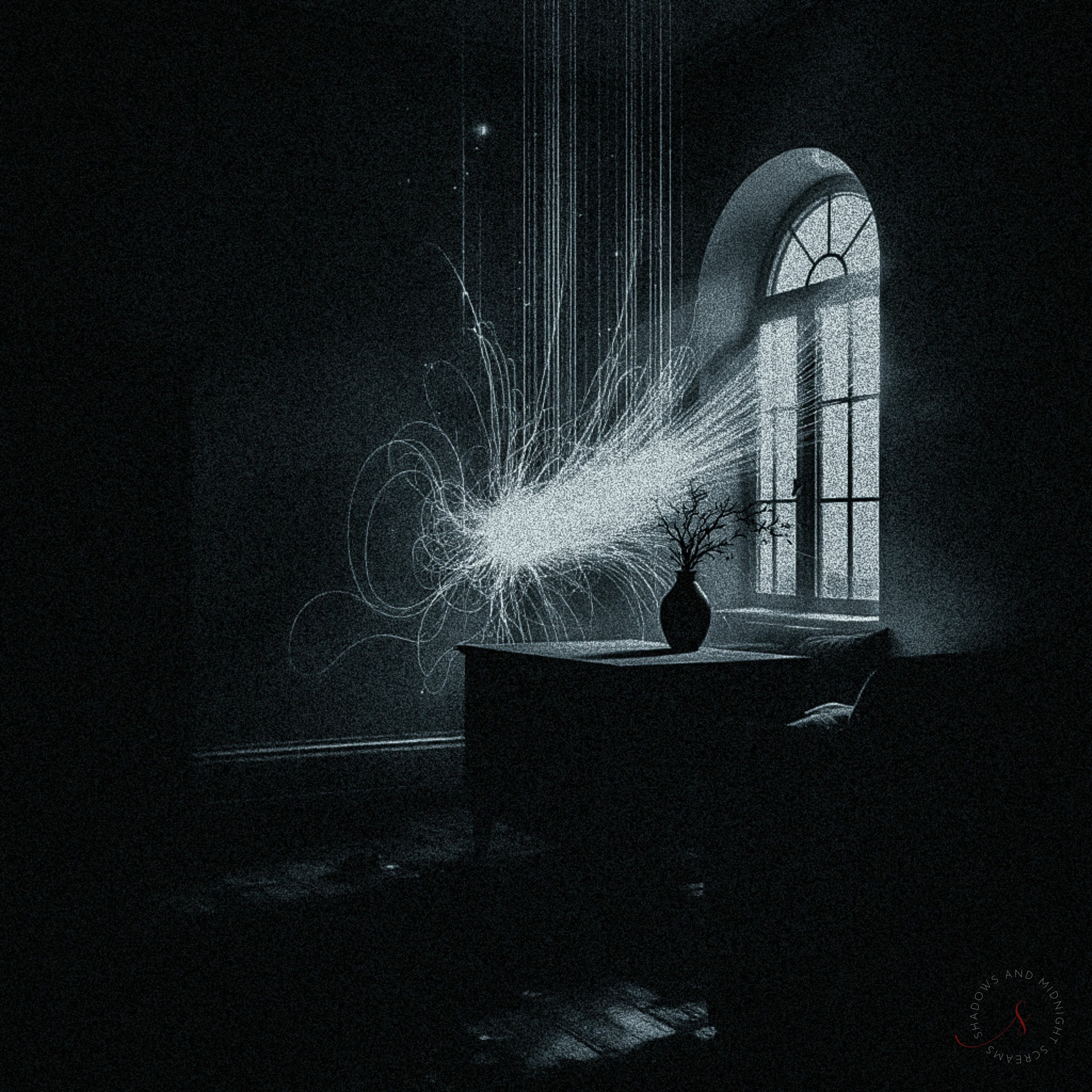
She tasted blood where she’d bitten the inside of her cheek. Her jaw throbbed as the anaesthetic wore off.
A bus sighed against the kerb and lowered itself for waiting passengers.
She climbed aboard.
The doors hissed shut.
As the driver pulled away, a loose panel somewhere above her head rattled.
The sound wasn’t loud. But it was... sharp. As though someone had plucked a wire stretched tight inside her skull.
She glanced up.
No one else seemed to notice.
The panel rattled again over the next pothole.
A tiny metallic vibration lingered long after the bus had levelled out.
She shifted to another seat.
But the noise followed.
By the time the bus reached the train station she’d convinced herself she was simply tired.
⌁⌁⌁
The platform was crowded with peak hour commuters.
An elderly couple stood shoulder to shoulder beneath the departure board.
A teenager ate hot chips from a paper bag.
Someone nearby peeled a mandarin.
Its scent drifted across the platform all citrus and sting.
The train arrived with the familiar squeal of steel against steel.
She had heard that sound hundreds of times.
Today, however, it screamed with the raw scrape of something alive being dragged unwillingly across bone.
Her shoulders shot upwards. She covered her ears and felt the vibration of steel run through her aching jaw.
The carriage doors opened.
Businessmen stepped aboard without looking up from their phones.
A woman smiled politely as she passed.
She stared at the rails, wondering how everyone else had learned to ignore a sound that felt capable of splitting heads in two.
She boarded against the push-pull of commuters all vying for a seat.
The carriage smelled of wet coats, stale coffee and the faint sweetness of someone’s vanilla perfume. The doors sighed shut behind her, sealing everyone into the same moving space.
She found an empty seat by the window.
The train lurched.
And for a moment everything was ordinary again.
Conversation settled into the familiar rhythm of public transport. A mother whispered to her son. Two university students compared lecture notes. Somewhere further down the carriage a ringtone chimed before being silenced.
She let out a breath she hadn’t realised she’d been holding.
When the train entered the first curve.
The wheels found the rails.
And the scream returned.
It ripped through the carriage with such violence she instinctively covered one ear as though the sound had struck from a single direction.
Nobody else moved.
No one winced.
A man in a navy suit continued reading an article on his phone, his thumb scrolling with mechanical precision.
Across the aisle, a young woman applied mascara using the darkened window as a mirror. Her hand remained perfectly steady.
How can they not hear it?
The train straightened and the scream dissolved into the steady clatter of wheels over rail joints.
Clack.
Clack.
Clack.
Each impact landed with microscopic clarity.
She was able to distinguish one wheel from another beneath the rhythm of the tracks. A tiny flat spot on one wheel somewhere beneath the carriage.
How could that be?
She knew nothing about trains.
Yet somehow the sounds separated themselves inside her mind, each demanding individual attention.
The ventilation system exhaled overhead.
Its bearings produced a soft, uneven whine.
Seat fabric rasped beneath the shifting weight of passengers.
Someone three rows behind scratched the stubble along his jaw.
A thumbnail caught on dry skin.
Scratch.
Scratch.
Scratch.
Her pulse accelerated.
The carriage wasn’t louder.
It was fuller.
As though every forgotten sound had decided, all at once, that it deserved to be heard.
She squeezed her eyes shut, but that only made it worse.
Without sight, the world rearranged itself into layers.
The fluorescent lights buzzed in a relentless electric chorus.
Brake pads whispered against steel with every slight reduction in speed.
A bottle rolled gently beneath someone’s seat before tapping against a shoe.
Tap.
Tap.
Tap.
The woman opposite uncapped a bottle of water.
The plastic seal cracked.
Her eyes flew open as the sound sliced through her like snapping bone.
She stared at the woman who smiled apologetically.
‘Long day?’ the woman asked quietly.
She blinked. ‘What?’
‘You look exhausted.’
The words reached her with the movement of saliva between syllables.
The tiny click of the woman’s tongue leaving the roof of her mouth.
The soft whistle of breath escaping through slightly crooked front teeth.
She looked away immediately, horrified by what she’d just seen.
No one should be able to hear another person that closely.
No one.
The train slowed for the next station.
Again the rails screamed.
This time she felt it in her molars.
A hot, vibrating ache travelled through her jaw, settling in the tooth the dentist had repaired less than an hour earlier.
She pressed trembling fingers against her face.
The ache vanished as soon as the train stopped.
The doors opened.
Fresh air drifted inside.
With it came a hundred new smells.
Rain on hot concrete.
Diesel fumes.
A newspaper still damp from the printing press.
Chewing gum.
Engine oil.
Someone eating cinnamon scrolls halfway down the platform.
Each scent arrived separately.
Introduced one by one, like strangers insisting on shaking her hand.
She almost laughed.
Not because anything was funny.
Because the alternative was panic.
Something had happened.
But she didn’t know what.
Somewhere between the dentist’s chair and Platform Three, the world had lost every filter it had ever possessed.
⌁⌁⌁
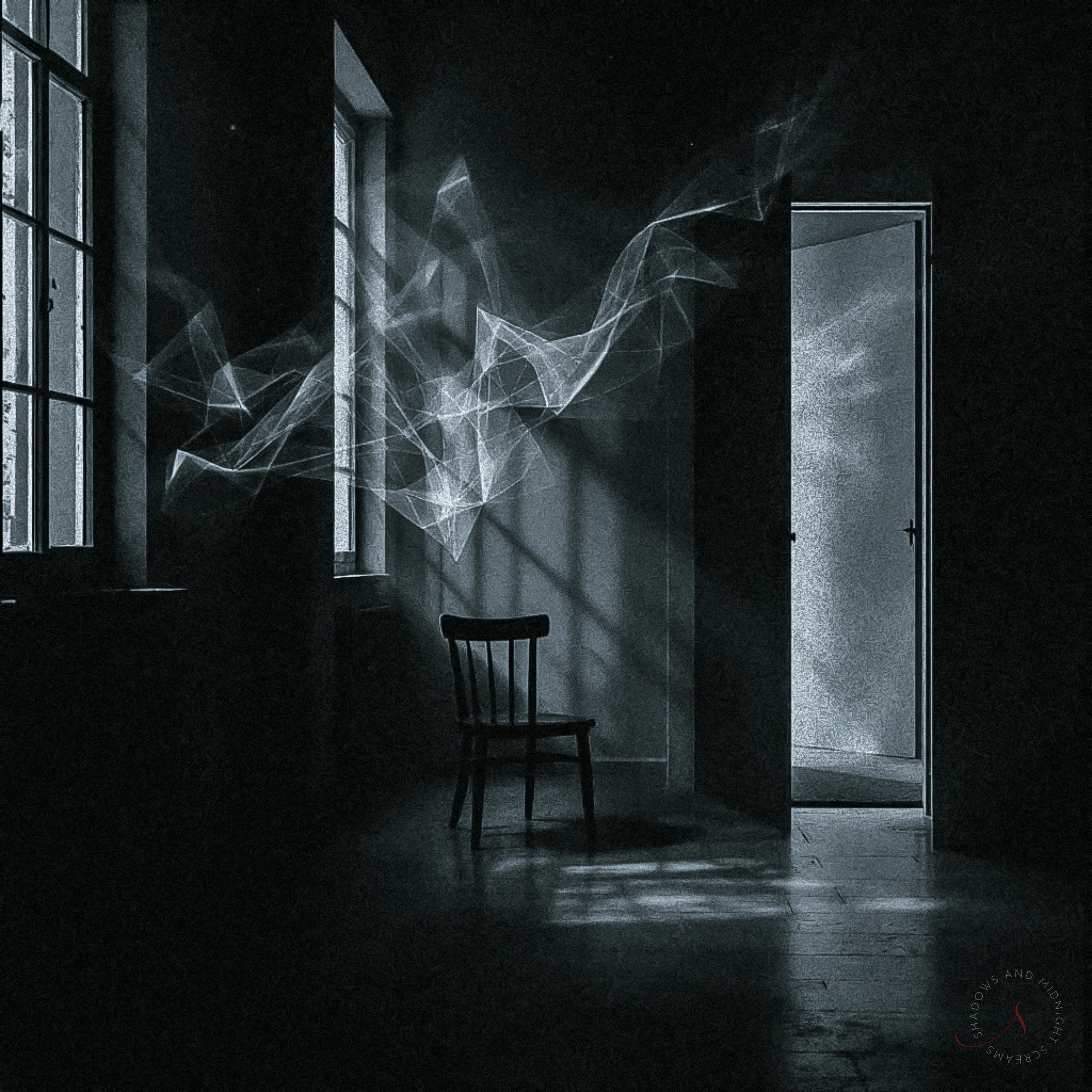
The front door closed behind her with a soft click.
Silence.
She stood in the hallway without moving.
The scent of cedar from the old coat cupboard greeted her, followed by lavender from the drawer sachets she’d forgotten she’d tucked away months ago. Underneath that was something else. Warm plaster. Dust. The faint metallic tang of old wiring hidden behind paint.
None of those smells had ever existed before.
Or perhaps they always had, and she’d never noticed them before.
She slipped off her shoes.
The leather creaked.
A tiny sound.
Yet it echoed through the hallway with startling clarity.
She frowned.
The house had never echoed.
She crossed into the kitchen and reached for a glass. Her mouth was so dry. The anaesthetic had finally worn off, leaving behind a dull ache that pulsed with every heartbeat.
The tap squeaked as she turned it.
Water rushed through the pipes.
She could hear it racing through the walls long before it reached the sink, surging around bends, pressing through copper arteries hidden inside the house.
The glass filled.
She lifted it to her lips, but the smell stopped her before she took a sip.
Chlorine.
Not the faint suggestion she’d noticed a hundred times before without thinking.
This was sharp enough to sting her eyes.
Beneath it lingered minerals, cold stone, rust and something earthy she couldn’t name.
She lowered the glass.
The water was perfectly clear.
She took the smallest sip.
Even the taste felt louder.
She poured it down the sink and reached for the bottled water at the back of the cupboard. She poured a glass. There was still a faint smell of something but she drank it anyway.
She picked up the remote and pressed the power button to the television hoping the sound might calm her nerves.
The screen bloomed into colour.
A presenter smiled.
‘...and tomorrow we’ll see temperatures—’
She stabbed at the volume on the remote.
Twenty-two.
Eighteen.
Twelve.
Eight.
Finally the voice settled into something almost bearable.
It wasn’t just the volume.
It was the edges.
Every consonant struck like tiny pieces of glass.
Every breath between sentences hissed with unbearable intimacy.
She switched it off.
The silence returned.
Only now silence had its own kind of sound.
The refrigerator compressor hummed from the far end of the kitchen, its rhythm gently rising and falling. Somewhere in the ceiling, timber contracted with a soft tick. The old wall clock in the lounge announced every passing second with crisp mechanical certainty.
Tick.
Tick.
Tick.
She had lived in this house for eleven years.
Had it always sounded like this?
She walked from room to room, listening.
The bedroom window whispered whenever a breeze found the smallest gap in the frame.
The bathroom extractor fan, though switched off, clicked once as it cooled.
The washing machine, empty since yesterday, released a tiny metallic ping from somewhere deep inside its drum.
The house wasn’t just making noise.
It was introducing itself.
She sat on the edge of the bed and buried her face in her hands.
She wanted to cry from sheer exhaustion.
It felt as though she’d spent the entire day trying to hold back the ocean with her bare hands.
She lay down exhausted. Sleep should have arrived quickly.
Instead, every sound took its turn.
The neighbour’s footsteps through the shared wall.
A dog barking three streets away.
The distant rumble of a freight train carving its way across the city.
A possum landing on the roof with a muffled thud.
Each sound waited patiently to be acknowledged, then stepped aside for the next.
At twenty past midnight she gave up trying to sleep.
She walked into the kitchen and stood barefoot beneath the rangehood.
The house settled around her.
Then she caught it.
Smoke.
Fresh but faint.
Wood smoke.
She checked the stove.
Cold.
The toaster.
Unplugged.
She opened the back door.
The cool night air stung her face.
Winter carried a hundred scents she had never known it possessed.
Wet eucalyptus.
Damp soil.
Jasmine from somewhere beyond the fence.
And beneath it all...
Smoke.
Far away in the distance.
She looked out into the darkness, and knew somewhere in the sleeping suburb, someone had lit a fire.
Nothing settled.
The sounds remained sharp, the smells remained vivid, and the world refused to soften again.
⌁⌁⌁
One sleepless night bled into the next.
She stopped opening windows because the city carried too much with it.
The world no longer arrived in manageable pieces.
It seemed to arrive all at once.
Her world wasn’t shrinking.
It was being carved away.
One ordinary sound at a time.
One evening she stood in the middle of the lounge room holding the cord to the refrigerator.
She stared at the plug for a long time.
Then she pulled it from the wall.
The humming stopped.
Relief arrived so suddenly she almost cried.
What if I turn everything off?
Maybe it will stop.
She unplugged the microwave.
The modem.
The clock.
The air purifier.
Room by room the house fell silent.
Or at least as silent as she could make it.
She sat on the floor and sighed with relief, counting her breaths.
For the first time in days she thought she might sleep.
Then she heard the food slowly defrosting behind the refrigerator door.
The milk carton gave a tiny crackle as its sides shifted.
Glass jars answered with delicate ticks.
Tiny contractions.
Metal pinged.
Plastic settled.
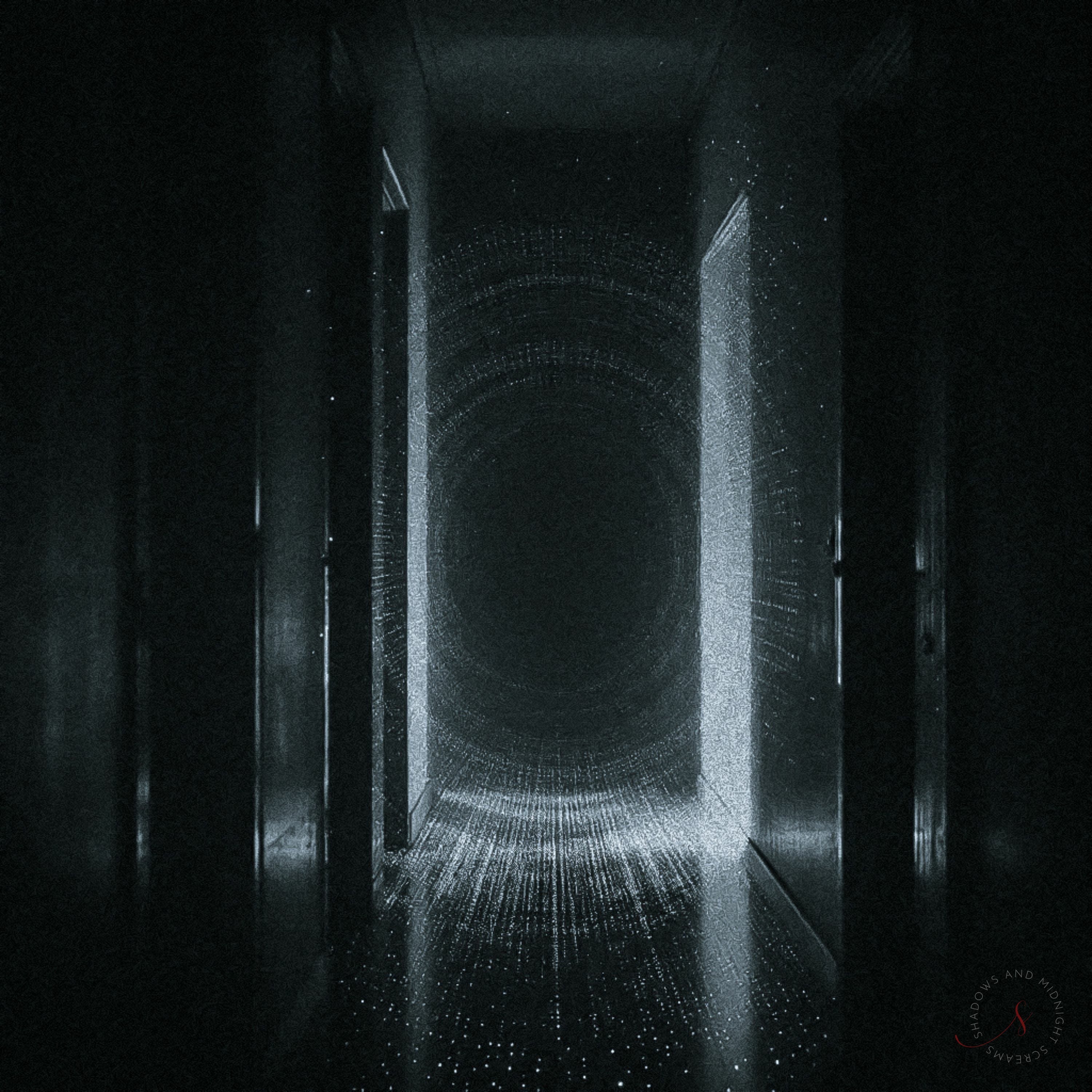
She pressed her palms against her ears, but it made no difference.
Nothing.
The sounds carried on without her permission.
Water shifted somewhere inside the walls.
She waited for silence.
It never came.
She stayed on the kitchen floor until dawn.
When she woke her mouth was dry.
Her head throbbed, and every bone in her body ached.
The sounds hadn’t stopped; they had just changed, so she plugged everything back in.
She realised she hadn’t been removing the noise.
She had only been uncovering quieter ones, the ones that had always been there.
Remove one sound, and there would always be another.
Another layer.
Another frequency.
The volume between things wasn’t empty.
It was never-ending.
© Samira Wyld 2026
Thank you for reading another post from Shadows And Midnight Screams where we delve into the world of shadows, desire, and untamed expression. My illustrated collection of poetry ‘Twenty Past Midnight’ is now available as a paperback and you can find out more about that here.
And until next time…
Stay seXy, Stay wYld, Be Free™

The title alone, hints at what’s to come. Another brilliant piece!
There are times of such clarity, when the world falls away, leaving only the sounds we usually.disregard sharpening our focus and leading us to the edge of madness. A haunting piece, love. 🖤🖤