
Everything Is a Conspiracy Until It’s Just Art
On stories, misreadings, and the art of letting art be art.

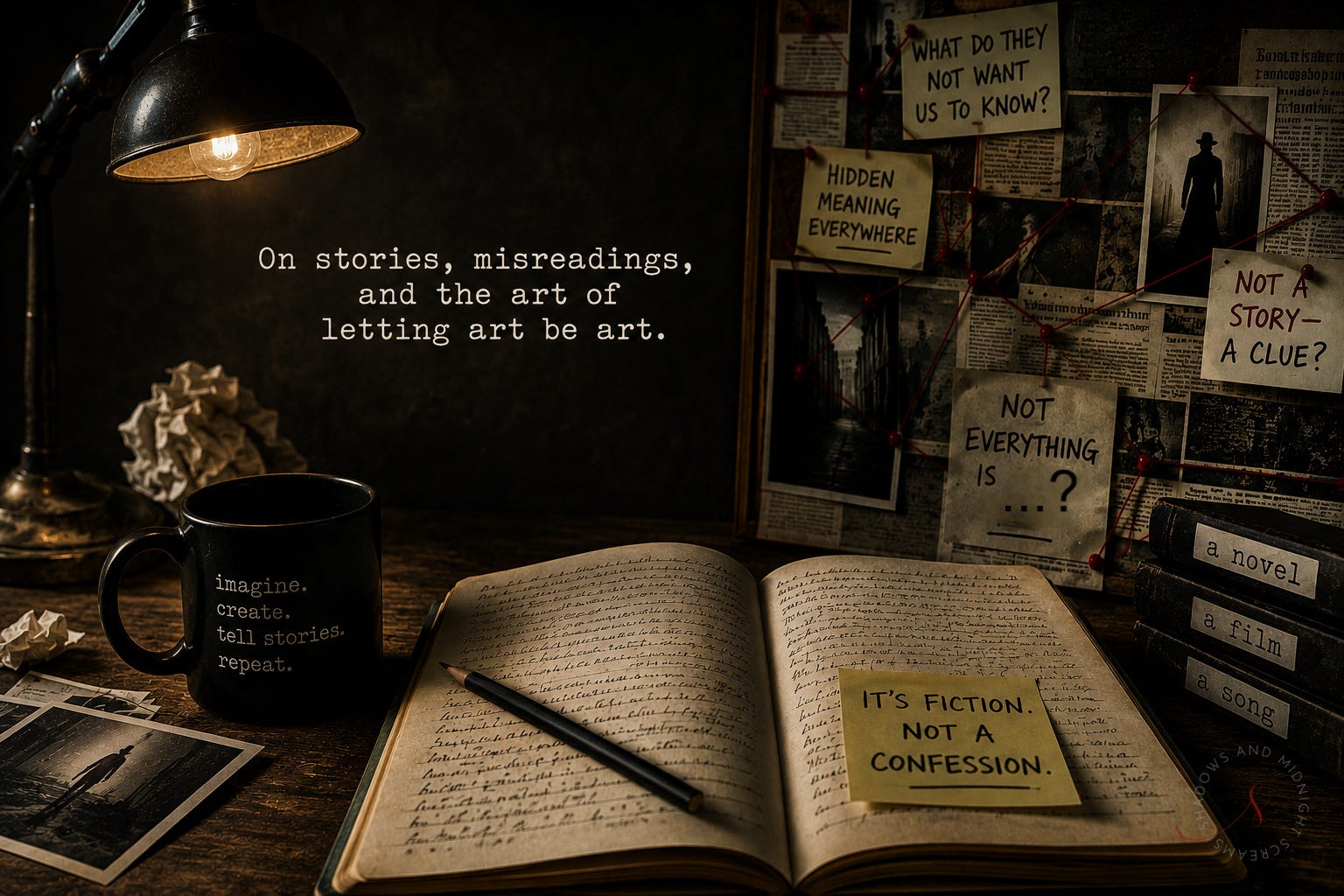
The internet has become a strange place.
I went down a bit of a rabbit hole today, as you do, watching several reels about James Franco.
According to many people, he’s signalling secret messages, talking about aliens, chasing adrenochrome, acting possessed, or revealing some hidden truth.
After looking through his Instagram, I didn’t find a man having a public breakdown. To me, it looked like an actor... acting.
Maybe he’s promoting a film. Maybe he’s simply telling a story. Maybe he’s creating a character. That’s literally what actors do.
Whether that’s exactly what’s happening or not isn’t really the point.
Now, don’t get me wrong. I’m no stranger to a good rabbit hole. There are plenty of things happening in the world that make me stop and think, Hang on... something about this doesn’t add up.
Curiosity is healthy.
Questioning things is healthy.
But so is discernment.
Somewhere along the way we’ve forgotten that artists are allowed to be imaginative. That actors are allowed to perform outside a cinema screen. That not everything unusual is evidence of a conspiracy.
What happened to storytelling?
What happened to letting creative people be... creative?
This isn’t something I’ve only noticed with actors. I write dark fiction, and some of my stories are written in first person. More than once I’ve had readers reach out to comfort me, convinced the story was autobiographical. Even family members have asked if I was okay after reading a published short story. They weren’t responding to the story. They were responding to the narrator. They assumed “I” meant “me.”
If a novelist can invent an entire world, if a musician can build an alter ego, if a filmmaker can create an alien invasion, why can’t an actor use Instagram as part of the experience?
We sit in a cinema for two hours believing every word that comes out of a character’s mouth. We don’t stop every five minutes while watching Apex, for example, to remind ourselves Charlize Theron isn’t really mourning her husband, or that Taron Egerton isn’t actually a fucking psycho.
We simply surrender to the story.
Now imagine an actor decided to stay in character on Instagram for a week or more before the film was released. No trailer. No context. Just cryptic posts, strange videos and unsettling behaviour.
How many people would recognise it as performance?
Judging by social media... not many.
Maybe the strangest thing isn’t James Franco’s posts.
Maybe it’s how quickly we’ve started treating fiction as fact.
Social media has become incredibly good at exposing real problems. It shines a light on corruption, injustice, and stories that deserve attention. That’s one of its greatest strengths.
But that same machine also rewards outrage, certainty, and wild conclusions. Before long, people stop asking, “Is this true?” and start asking, “How can I make this fit the story I’ve already decided to believe?”
That’s when we lose something important.
Discernment.
Not everything is a cover-up.
Sometimes it’s just art.
And maybe that’s the conspiracy we should be talking about: that we’ve become so conditioned to expect hidden meanings that we’ve forgotten how to simply appreciate a good story.
As someone who writes fiction, I want people to question the world. I want stories to unsettle you and make you think. I also hope we’ve not reached a point where every piece of performance art is treated like leaked evidence.
Sometimes a story is just a story.
Have we become so accustomed to treating everything online as evidence that we’ve forgotten how to recognise a story when we’re looking at one?
Let me know what you think in the comments.
Thank you for reading another post from Shadows And Midnight Screams where we delve into the world of shadows, desire, and untamed expression. My illustrated collection of poetry ‘Twenty Past Midnight’ is now available as a paperback and you can find out more about that here.
And until next time…
Stay seXy, Stay wYld, Be Free™

"It's fiction. Not a confession." Love this
"Sometimes a story is just a story."
Fabulous essay Samira. Even I have read some of your work and have tended to believe the voice of a fictional narrative must belong to the author. You asked what we think: when THAT happens, you can be sure the author (or actor) is doing a great job at portraying / delivering a story. As you put it, we can sit in a movie and set aside disbelief on purpose, knowing it's fiction -- because it's a movie.
But, readers, especially on social media, do tend to think it's all true. No ability to apply critical thinking.
You wrote:
"Discernment....Not everything is a cover-up. Sometimes it’s just art. As someone who writes fiction, I want people to question the world. I want stories to unsettle you and make you think. I also hope we’ve not reached a point where every piece of performance art is treated like leaked evidence. Sometimes a story is just a story."
AMEN! Well written and important to be shared with a wide audience.